Michelle Alexander
-
As an award‑winning poet and interdisciplinary scholar, I engage with Black diasporic memory, archival absence, and lyric reclamation.
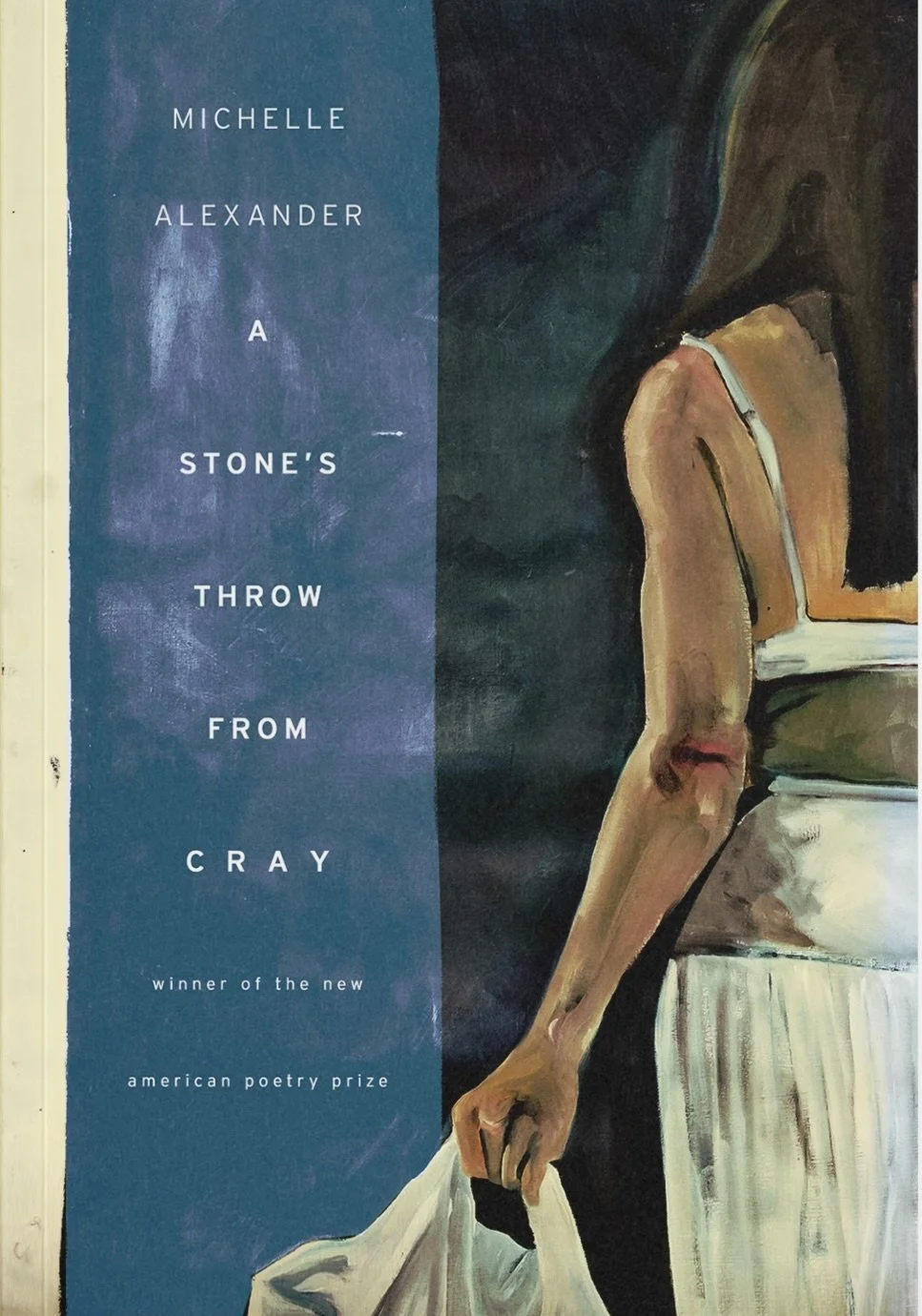
My debut collection, A Stone’s Throw from C R A Y (New American Press, 2026), won the New American Press Prize. The work considers modulated forms of lucidity, a generative, anguished, and unruly perception that counters an anti-Black world.
My second book, Painstar, Starline, received the Nightboat Poetry Prize and is forthcoming in 2028. Extending my inquiry from C R A Y, it bridges performance, frequency, and archive. This work translates pain into navigational systems of wounds and light.
Visiting Teaching Artist in Residence MCLA + MOSAIC
Visiting Artist Poetry Foundation: Forms and Features Series
Poet in Residence for the Chicago Poetry Center.
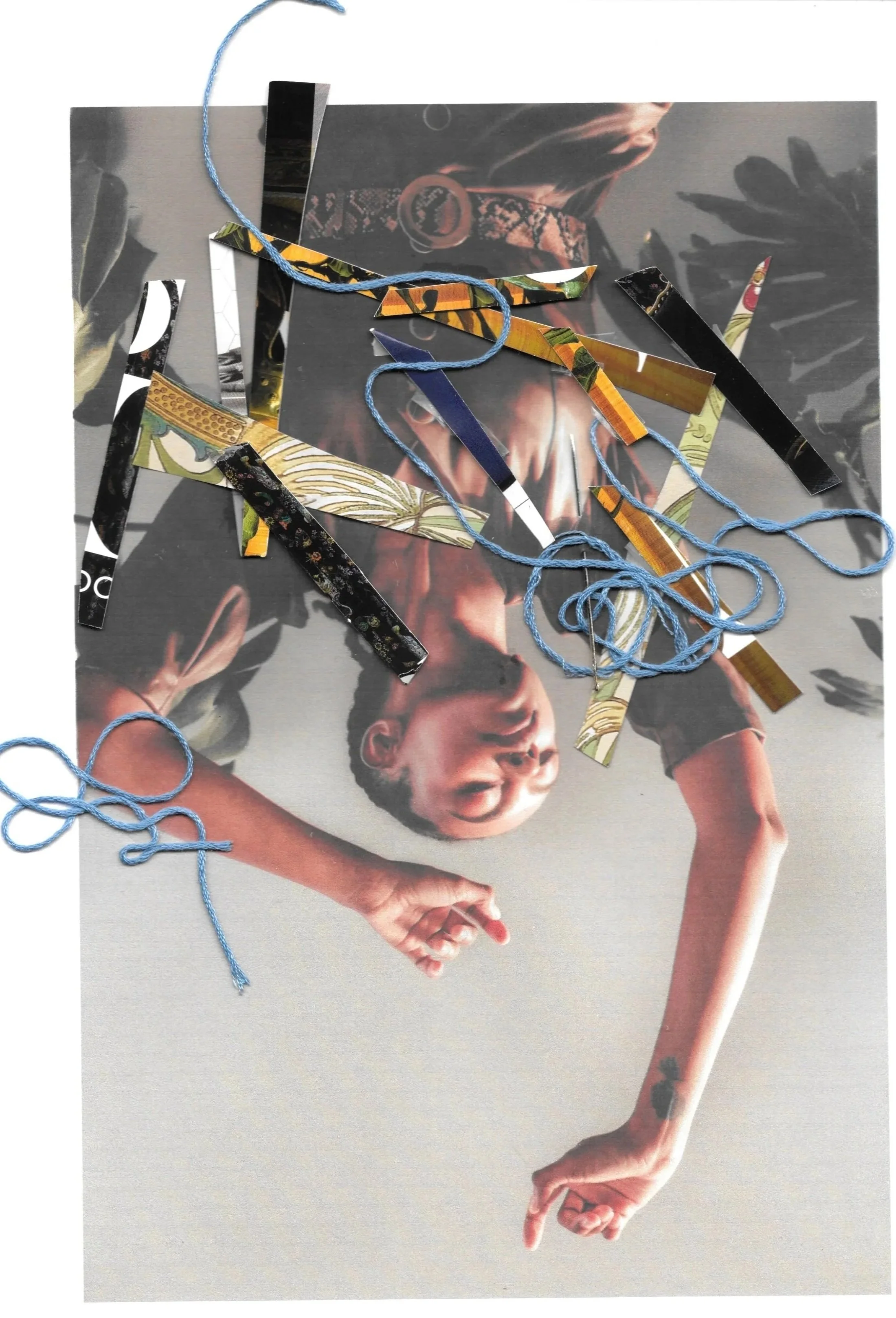
Poetry Collage Mixed Media “After H(Ours)” Mixed Media Installation, The Bishop Gallery, (2024)
-
Interdisciplinary projects with Unwoven Literary & Arts Magazine
“The Body Between Labyrinth & Maze” short film (2025)
“UnWoven Between the Disciplines: Poetry & Art,” craft essay and workshop, The Poetry Foundation (2025)
“Andre Barker Jr.” artist interview short film (2024)
Forthcoming MCLA + MOSAIC Benedetti Teaching Artist in Residence: Constellations of Wounds and Light
-
Selected Awards & Fellowships
Winner, 49th Parallel Award in Poetry (2026)
Winner, Nightboat Books Poetry Prize (2025)
Winner, Breakwater Peseroff Prize (2025)
Winner, Furious Flower Poetry Prize (2024)
Winner, New American Press Poetry Prize (2024)
Nathan Breitling Fellowship (Columbia College Chicago)
Selected Finalist and Shortlist Honors
West Trade Review Prize Finalist (2026)
James Hearst Poetry Prize Finalist (2026)
Omnidawn Poetry Prize Finalist (2025)
Pacific Spirit Poetry Prize Finalist (2025)
Georgia Poetry Prize Finalist (2025)
X.J. Kennedy Prize Finalist (2025)
Charles Simic Poetry Prize Finalist (2025)
Oxford Poetry Prize Shortlist (2025)
Banyan Poetry Prize Finalist (2025)
Dogwood Prize Finalist (2024)
National Poetry Series Finalist (2024)
WICW Poetry & Fiction Fellowships Finalist (2024)
Epiphany Magazine Breakout Poetry Prize Shortlist (2024)
-
As an interdisciplinary Humanities Co-Professor and Creative Writing Teaching Artist, I foster in my students the ability to reshape the world's contours. My pedagogical investments entwine with the possibilities of the liberal arts embedded in study, and I structure my classroom through inquiry, reflection, discussion, experimentation, and practice—allowing my students to develop their critical eyes and aesthetic judgment. In my creative writing classroom, where students are collaborators, we consider “negative capability” a means of thinking otherwise than within rational schemas, and my students embody it as a growing poetic instinct. Broadly, in my classrooms, students learn to read as writers, to approach objects in an archival-poetic manner, analyzing craft, technique, and style, while developing singular voices. This is achieved through ekphrastic frameworks that enable individuation and responsiveness, thereby tethering students' capacity for allusive play.
Embedded in my courses are introductory open-genre, intermediate, and advanced creative writing workshops for both MFA-level students and undergraduate-level students. Through exercises like the “rose/bud/thorn” ritual, we cultivate an ethic of care and deepen relationships among students, integrating theory with craft in our work.
In my co-professorships, teaching poetry-philosophy and poetry-media undergraduate courses for Illinois Humanities’ Odyssey Project, I root my teaching in spaces that invite learners to inhabit creativity. We engage with texts that explore memory, haunting, and synesthesia as modes of sensory transformation, and consider how to craft fabulations of subjectivities. I come alongside my students through iterative, progressive structures by scaffolding projects, providing portfolio-creation pathways, and offering opportunities for close reading, revision, and synthesis.
This translates into the revisionary and critique processes that we deploy, as well as an expansive sense of subjective positions that allows us to see the futures of our work differently through image, line, metaphor, and figures such as prosopopeia.
Students produce hybrid creative-critical work that inscribes imagination and insight while developing a nuanced attention to poetic craft, form, and revision. When students move poetically, I believe they are enacting a language that gifts identity, both in its revelatory function and in its capacity to illuminate perceptual transformation.
Courses Taught / Designed
Black Poetry, Philosophy, and The Wish: Otherwise & Otherworlds
Visions of Space and Place: Poetry & Media
Writer’s Studio 1
Responding to Art
Writing and Rhetoric 1
Courses Prepared to Teach: Creative Writing/Literary
Introduction to Creative Writing (open genre)
Intermediate Poetry Workshop
Advanced Poetry Workshop
Documentary & Archival Poetics
Constellations of Wounds and Light: Poetry, Archive, Art
Contemporary Poetry after 1960
Special Topics in Contemporary Lyric
Sleep: Thresholds and Threshers in Contemporary Poetry after 1960
Publications
Books
Alexander, Michelle N.
A Stone’s Throw from C R A Y. New American Press, March, 2026.
Winner, New American Press Poetry Prize (2024). National Poetry Series Finalist (2024), Word Works Prize Finalist (2024), The 42 Miles Press Prize Finalist (2024), and the Lightscatter Prize Finalist (2024).
Alexander, Michelle N.
Painstar, Starline. Nightboat Books. Forthcoming, Spring 2028.
Winner, Nightboat Books Poetry Prize ( 2025).
Georgia Poetry Prize Finalist (2025); X.J. Kennedy Prize Finalist (2025); Omnidawn Prize Finalist (2025)
Manuscripts in Progress:
WtD, Comparing Notes
“
I admire so much in the poem “Splitting St. James Infirmary: Cab Calloway Orchestra | Yo-Yo Ma and The Silk Road Ensemble,” the aesthetic and typographic risk-taking; a wide cross-cultural intelligence, a historical knowing, the poem’s ekphrastic edges, the textured language that honors the poem’s iconic musical genius and his energetic performances. Like Calloway, Alexander judiciously hits notes that are formidably lyrical, possessed, and sustaining: “like taking turns pulling our eyes through [her] batoned swagga?” This is what it means to possess a “tongue of faith.” I enjoy most the writer’s confidence in us to make use of the poem’s indeterminate acts of language; here is a generosity that I find refreshing. We stand at the poems’ thresholds of meaning, but also relish how the poem teases us forward like the sinuous, melodic lines of the poem’s eponymous song.
Words from Major Jackson on Michelle Alexander’s 2025 Peseroff Poetry Poem
Selected Journal Publications
“Harvest Talk” West Trade Review (Finalist, Forthcoming 2026)
“Black Venus” The Madison Review (Forthcoming 2026)
Multiple Poems, Special Portfolio, Notre Dame Review (Forthcoming 2026)
“Our Net Worth,” Third Coast (2026)
“After H(ours),” The Banyan Review (Finalist, 2025)
“ippississiM Backwards,” Crab Creek Review (Semi-Finalist, 2025)
“Splitting St. James Infirmary…,” Breakwater Review (Winner, 2025)
“These Sounds Fall into My Mind,” Oxford Poetry (2025)
“To Wish for Ourselves,” Sine Qua Non (Finalist, 2025)
Multiple poems, Puerto del Sol (Editor’s Pick, September 2024)
“Our Rogue Swagger,” Epiphany (Fall/Winter 2024)
“Tumult out of the Spirit of Language,” Allium (Fall 2024)
“Unbidden Mourning,” Allium (Fall 2024)
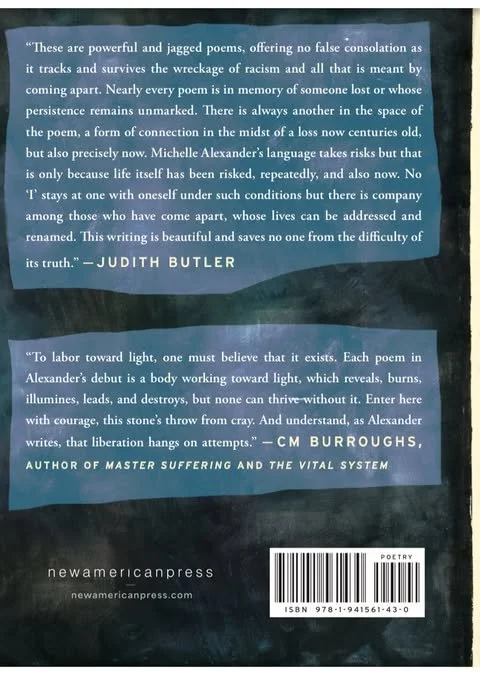
Michelle Alexander’s A Stone’s Throw from C R A Y takes up and is moved by radical Black creativity. Being thrown here unfolds an experience of human connection, struggle, and transformation within and beyond institutionalized and Afro-Caribbean contexts. The poems skip across surfaces while collapsing personal and collective histories, thereby shifting spaces of potential that also unsettle Alexander’s demarcations. Unfurling remixed narratives and embracing the fluidity of identities, the subjects vibrate with her American-Trinidadian imagination. She poetically ambiguates and attends to the relations between the living and the dead, psychosocial precarity, and colonialism. Here, our journey steps alongside chances at resilience.
Unwoven Between the Disciplines
Unwoven Between the Disciplines: The Body Between Labyrinth and Maze
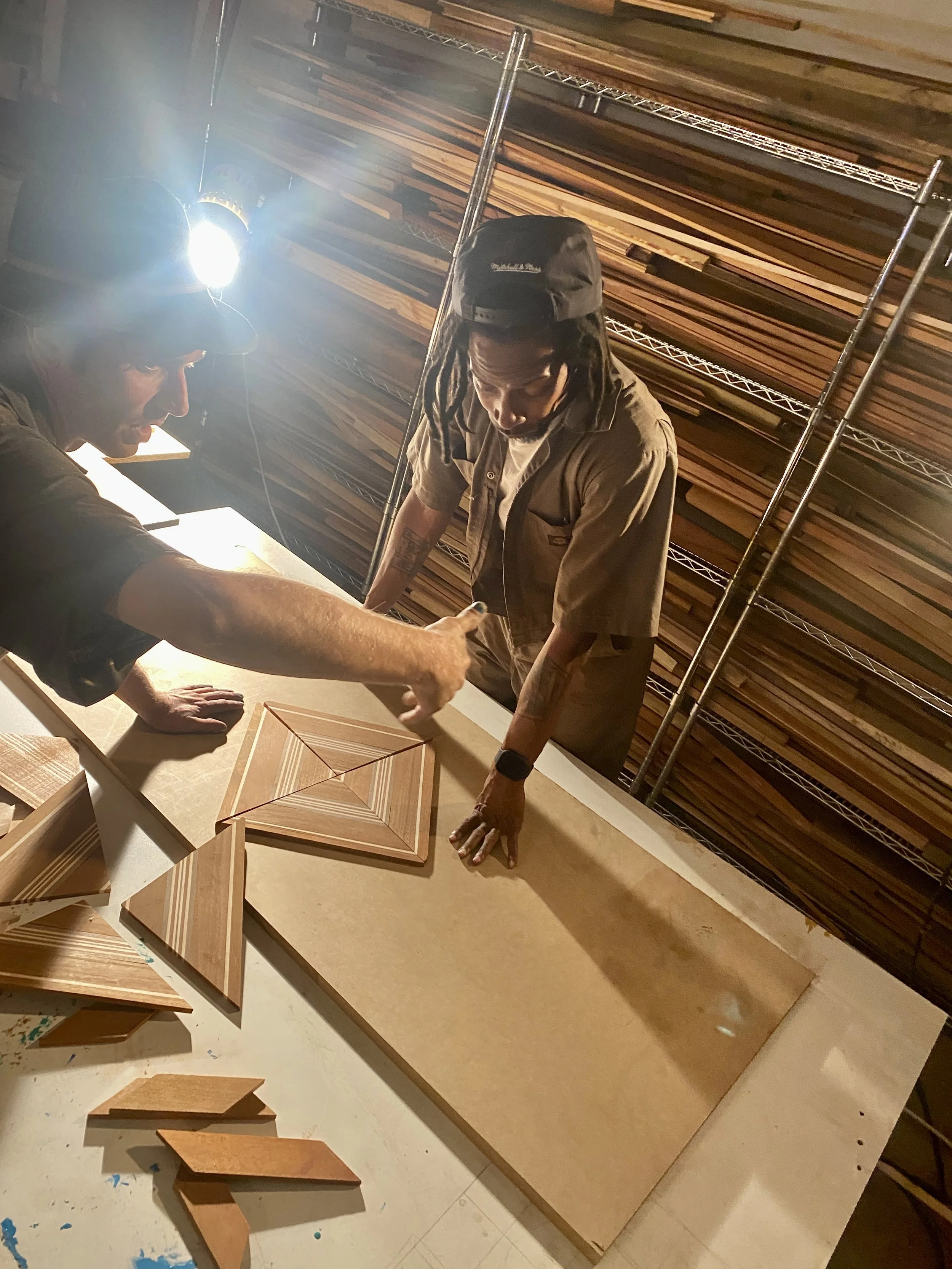
As Unwoven Literary & Arts Magazine’s Director of Interdisciplinary Arts, I, alongside Director Leslie Crum, brought together three artists: woodworker Michael Kendall, dancer Milenka Aurelio, and poet Michael Frazier to create original art and produce an interdisciplinary arts short film. The Body between Labyrinth and Maze explores the labyrinthine and maze-like dimensions of experience, which elicit bewilderment, uncertainty, relief, acceptance, and heightened presence. These effects bring into question: How do we navigate internal choices when the path is unclear?
Together, we ventured to continually ask, how do acceptance, frustration, and belief live in the body? And how many dead ends are not dead-ends at all…but, as Frazier would write, “chances to start over again, this time slower…”. Within the labyrinth-maze, our bodies and minds became entangled among both winding pathways that provoked reflection and multiple-way designs that puzzled upon entry. In this way, the labyrinth-maze became an alternative idiom for our experiences in relationships, with debt, with addiction, and with mystery, tethering the disciplines to life experience. Our critical inquiry yielded poetic and existential consequences. Working with each of these artists on the project, witnessing their collaboration unfold, and experiencing the art that emerged has transformed my creative life.
Months earlier, I had begun research for The Body Between Labyrinth and Maze and identified ways of reading the binds and possibilities of exploring maze + labyrinth structures, their dualities, juxtaposition, raw experience, contemplative artistry, delineations, and complications, which served as poetic bases for selecting the artists to be featured in the project. I encountered Kendall’s work at Pilsen Made and was struck by the intricacy and generosity of his craftsmanship. It felt clear that his work could hold this project up, both structurally and ethically. He is… salt of the Earth. I experienced Aurelio’s entrancing movement and was moved by their sensitivity and emotional fluency; they brought a depth of attention that keeps uncertainty open and alive. Frazier was so indispensable to this project —I heard his work at a Poetry Foundation reading and was struck by his rhythmic precision and the viscerally spiritual quality of his language. When we formed as a group, the three artists and Crum and I began with a question: What is a maze, and what is a labyrinth? In examining these structures—both materially and metaphorically—we found them linked by the confusion they generate, and by the deep belief that comes into play when we move within them. Often, it became difficult to tell the maze apart from the labyrinth. And it was precisely in that indistinction that this project took shape: in the space of the body between the labyrinth and the maze. This project began as a wager: by bringing these disciplines together, we might not resolve these experiences of confusion and connection across the labyrinth-maze and among each other, but we might inhabit them more fully.
Confusion, alongside feelings of conviction and crisis, morphed into the languages of dance, poetry, and woodwork, excavating how we negotiate and construct human relationality. Responsiveness enabled a reciprocal process: Milenka Aurelio’s movement and Michael Frazier’s poetry called forth Michael Kendall’s construction of a wooden labyrinth. And then that structure spoke back—reshaping movement, redirecting language, and asking each artist to navigate something they did not fully control. Following an experimental ethic, the collaboration solicited a DJ, Viper, to provide a beat to underscore the poem “Addiction is a Maze,” and Milenka improvised until finding a movement that reflected the shake and frenzy, the desperation and trust that emerged, translating the poem into movement. Asking, What are our modes of persistence? Alongside, what if the maze was made by a loving architect? allowed us to realize that the body between labyrinth and maze became a moving spatial configuration, a weathered structural metaphor, and a site of encounter with one another.
Perhaps the simultaneity of the traits of a maze conjured also the question which wreathed the center of our theme, “What does the body represent in your work? A space of creation? A harvest of potential? A wound? A way of communicating?” Milenka Aurelio beautifully articulated how the body is a site of “memories, trauma, joy, history, and potential— all at once” in their contemporary dance practice. They further articulated how the body is the very medium from which they create and how they show— or is the presentational form of what they have created. Across this endeavor, what emerged was not resolution, but attention to how our bodies register structure, and how we move within what both guides and confounds us. And perhaps most importantly, to the idea that these entanglements can be shared—that we are not alone inside them. This is where the work at times exceeded the bounds of the interdisciplinary—it became relational. A shared site of investment, where what we often experience in isolation could be held in a sense of solidarity.
Education
MFA, Creative Writing, Columbia College Chicago
Nathan Breitling Fellow
PhD Coursework, Philosophy, Art & Critical Thought, European Graduate School (ABD coursework completed)
BA, Humanities, NYU Gallatin School of Individualized Study
Herbert Rubin Prize in Poetry